AI Didn't Increase Your Workload — It Removed Your Stopping Point
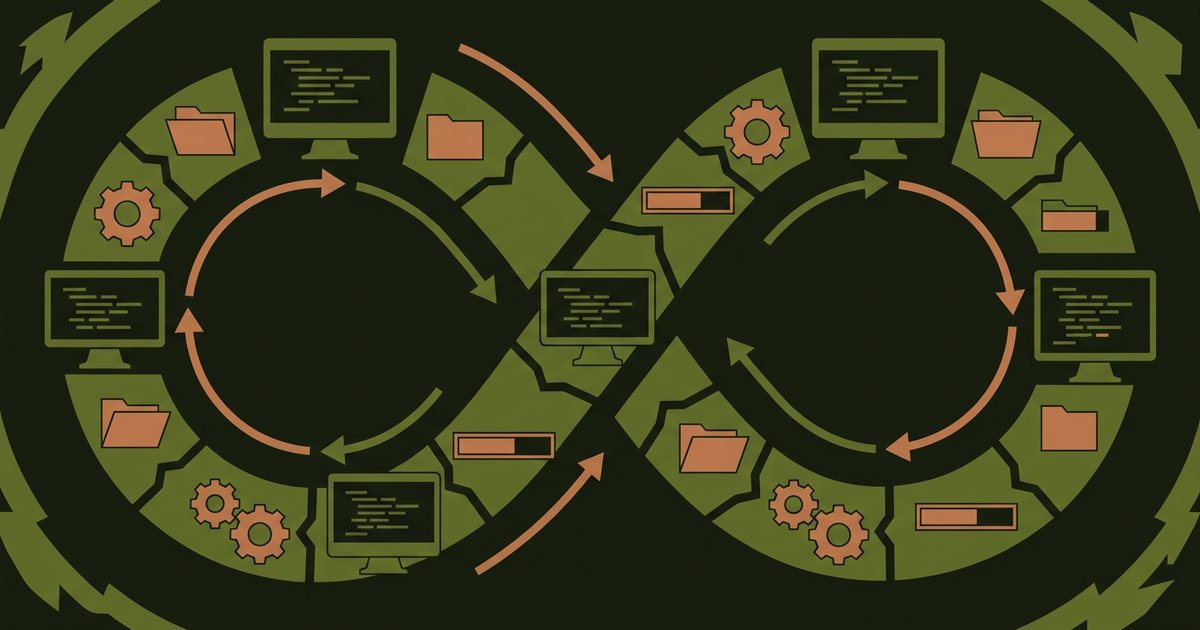
You're Not Working Harder. You're Just Never Stopping.
Before AI, there were natural stopping points.
A design revision took time. You'd hand it off, wait for feedback, maybe grab coffee. A paragraph of writing required thought—you'd pause, edit, move on. A piece of code had a clear deadline: the feature was done or it wasn't.
Now? There is no "done."
AI has collapsed the friction that used to give you permission to stop.
The Problem Isn't How Much You Work. It's That You Can't Stop.
Here's the cruel irony: AI tools didn't increase your workload. They removed the boundaries that used to protect you.
Before AI:
- Draft → revise once → feedback → adjustment → complete
After AI:
- Generate → refine → regenerate → tweak wording → adjust tone → try a different angle → regenerate → one more iteration → refine the refinement → maybe try version B → compare all versions → blend the best parts → regenerate again
Every task now has an endless refinement loop. Because you can generate alternatives instantly, there's always "one more version" worth exploring.
Why Instant Feedback Creates Compulsive Iteration
AI feedback is immediate. That's the problem.
Your brain is wired for feedback loops. Instant feedback triggers dopamine. Dopamine drives compulsive behavior.
- You refine a paragraph → instantly see three better versions → your brain wants the hit of a better result
- You regenerate a design → immediately compare options → the optimization instinct kicks in
- You ask for "one more iteration" → it arrives in seconds → you have no reason to stop
The friction is gone. And with it, so is your natural stopping point.
This isn't weakness. This is a system problem. Humans weren't built to resist infinite, zero-cost alternatives appearing on demand.
The Extended Workday Nobody Talks About
Here's what's actually happening to your screen time:
Tasks that used to end in 30 minutes now take 90. Not because you're doing more work. Because you're iterating endlessly.
The awareness phase disappears. You sit down for "quick refinements" and realize two hours have passed. Your blink rate has tanked. Your eyes are dried out. Your shoulders are tense.
But the work looks so good. One more iteration. One more option to compare.
Why This Specifically Hurts Your Eyes
Extended uninterrupted screen time is the core problem with eye strain. AI workflows are uniquely aggressive about this.
Here's what AI-accelerated work does to your visual system:
- Reduces blink rate — You're focused on comparing AI outputs, not pausing naturally
- Extends sessions — Every completion trigger generates more work, so you never leave the screen
- Increases micro-optimizations — Small tweaks feel "free," so you do dozens of them
- Eliminates natural breaks — There's no handoff moment, no feedback wait time, nothing that forces you to look away
Multiply that by 8 hours a day, and your eyes are under constant, compounding strain.
The Trap of "Just One More"
You know the feeling:
"Let me regenerate this one more time."
"Actually, let me try three different approaches and pick the best."
"Maybe I should compare all of them side-by-side."
"One more iteration—this version is close."
Each decision takes seconds. Each iteration generates dopamine. Your brain treats each cycle as a small reward.
But here's what your eyes experience: three more hours of continuous focus without a break.
This Isn't a Willpower Problem
You can't "just stop" because:
- You get absorbed in optimization
- Each iteration legitimately looks better
- There's no external deadline forcing you to ship
- The cost of iteration is zero (it's instant)
- Your brain is being rewarded by the feedback loop
Telling yourself "I'll take a break after this iteration" doesn't work. There's always a next iteration.
The Only Solution Is Automatic Interruption
You need a system that doesn't depend on your willpower or awareness.
The 20-20-20 rule (every 20 minutes, look 20 feet away for 20 seconds) was designed to prevent eye strain. It works—if you actually do it.
But in the middle of an AI iteration loop? You won't remember. You won't want to. The automation is too compelling.
Detox Kit Builds Structure Into Chaos
Detox Kit creates the stopping points that AI removed.
It runs silently in your menu bar. Every 20 minutes, it delivers a gentle reminder that interrupts the cycle. Not harshly—it detects pauses in your typing and waits for a natural moment to nudge you.
For 20 seconds, you step away. Your eyes refocus. Your ciliary muscles relax. Your blink rate resets.
Then you come back to the AI-assisted work, but now you're starting a fresh cycle instead of the 47th iteration.
The result? You produce better work. Your eyes stay healthy. You actually stop.
Keep Reading
- Productivity Culture Is Quietly Destroying Your Eyes — How hustle culture became an eye health crisis.
- The Myth of "I'll Take a Break When I Feel Tired" — Why waiting to feel strain means you're already too late.
- What Actually Happens to Your Eyes in an 8-Hour Workday — The hour-by-hour biological timeline.
Protect Your Eyes, Effortlessly
Detox Kit brings the 20-20-20 rule to your Mac with smart, non-intrusive break reminders that respect your workflow.
Download Detox Kit for Mac